Padel Hand Signals and On-Court Communication
Padel hand signals explained: the behind-the-back serve signals, the verbal calls that matter, and how to build a system with your partner.
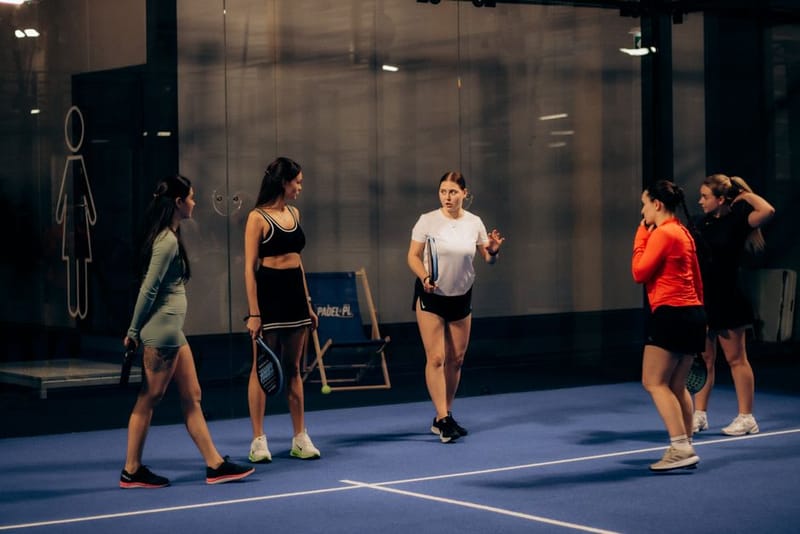
Padel is always doubles, and doubles is won and lost on communication. The best pairs are not always the most talented - they are the ones who move as a unit, and that only happens when both players know what the other is about to do. Hand signals before the serve and clear calls during the point are how good partnerships achieve it. Here is the system, and how to build your own with a regular partner.
Why do padel players use hand signals?
The middle of the court is where most doubles points are won, and the net player is the one who controls it. The problem is that the server, standing behind, cannot see what their partner at the net intends to do. If the net player suddenly poaches - darts across to intercept the return through the middle - the server has to cover the space they leave behind. If the server does not know it is coming, they are caught flat-footed and the gap is exposed.
Hand signals solve this. Before the serve, the net player discreetly signals behind their back so only their partner can see, telling them what they plan to do. The server reads the signal, serves accordingly, and is ready to move. It turns two players guessing into a coordinated plan.
What do the padel hand signals mean?
There is no single official code - pairs agree their own - but most padel and doubles players use a simple, widely recognised system with the signalling hand held behind the back at waist height:
- Closed fist - "I'm staying." The net player will hold their position and cover their own side.
- Open hand - "I'm poaching." The net player intends to move across the middle to intercept the return, so the server must cover behind them.
- Pointed finger or direction signal - some pairs add a second signal indicating where to serve (down the middle to the T, out wide, or into the body) so the net player knows which way the return is likely to come.
The exact gestures matter far less than both players agreeing them beforehand and using them every single serve. Keep the system simple - two or three clear signals - so there is no confusion under pressure.
What verbal calls should you use during a rally?
Once the point is live, talking takes over from signalling. A few short, instinctive calls prevent the two most common doubles mistakes - both players going for the same ball, or both leaving it. Build these into your game:
- "Mine" / "Yours" - who takes a ball down the middle. The single most valuable call in doubles.
- "Leave" / "Out" - let a ball go because it is heading out or will come off the back glass to play more easily.
- "Bounce" or "off the glass" - a heads-up that a ball is coming off the wall, so your partner can adjust.
- "Switch" / "change" - you are swapping sides, so your partner knows to cover.
- "Up" / "back" - a quick cue about position when one of you needs to move to or from the net.
Call early and call loudly. A late or half-hearted "mine" is worse than no call at all, because your partner has already committed.
How do you build a communication system with a partner?
Good communication is a habit you build, not a talent you are born with. A few principles help:
- Agree your signals before you play, not mid-match. Spend two minutes confirming what a fist and an open hand mean so there is no ambiguity.
- Talk between every point. The best pairs have a quick word after each point - what worked, what to try next, who to target. It keeps you thinking as a team.
- Keep it positive. Encouragement after an error keeps a partner loose; frustration tightens them up and communication dries up exactly when you need it most.
- Play with the same partner where you can. Familiarity is what turns a set of signals into genuine anticipation, where you move together without needing to think.
If you are still finding your feet in the game, our beginner's guide to padel covers the fundamentals, and advanced court etiquette looks at the finer points of playing well with others.