Prescription Glasses and Contacts for Padel
Can you wear glasses to play padel? Why regular specs are risky, why contacts plus impact-rated goggles win, and the real eye-injury danger in padel.

If you wear glasses, playing padel raises two questions at once: how do you see the ball clearly, and how do you protect your eyes from it? They are linked, because the sport carries a genuine eye-injury risk, and the way you correct your vision affects how safe you are. Here is what the research says and how glasses-wearers should actually kit themselves out.
Is there really an eye-injury risk in padel?
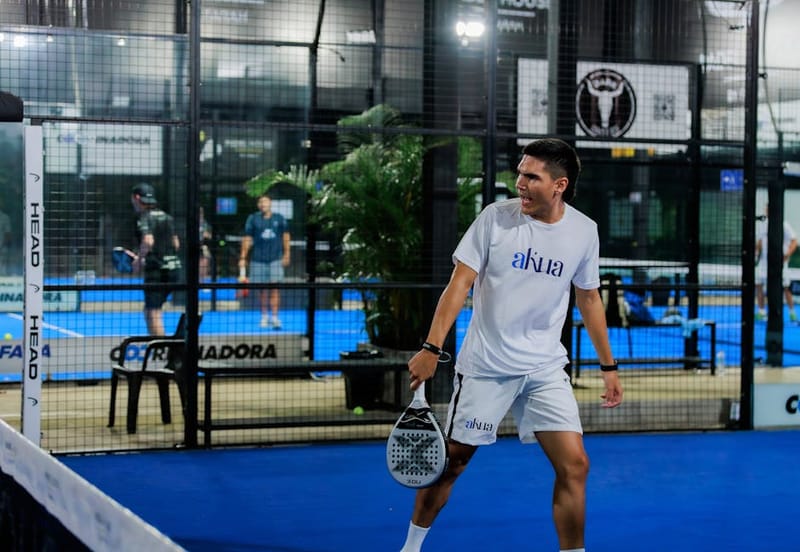
Yes, and it is more serious than most players assume. A padel ball weighs around 50 grams and can be struck at over 150 km/h inside an enclosed court, where it ricochets off glass and can arrive at the face with little warning. Ophthalmologists have flagged padel as a growing cause of eye-injury emergencies - research published in the journal Eye, alongside warnings from eye specialists in Sweden and Spain, links the sport to injuries ranging from corneal grazes to far more serious damage such as retinal detachment and, in the worst cases, permanent loss of vision.
You do not need to be an elite player to be at risk - a mishit or a ball off the glass at close range at any level can do damage. That context matters when deciding how to handle glasses on court.
Can you wear normal prescription glasses to play padel?
You can, but everyday prescription glasses are not a good solution and offer little protection. The problems are practical and safety-related:
- They are not impact-rated. Standard spectacle lenses and frames are not built to take a ball at speed; if struck, they can break and drive fragments towards the eye - the opposite of protection.
- They move and fall off. Padel's quick direction changes and lunges shift ordinary glasses, and a pair sliding down your nose mid-rally is a distraction and a hazard.
- They fog and smear. Sweat and humidity fog lenses, especially on covered and indoor courts, blurring vision at the wrong moment.
- No side protection. Open-sided frames leave the eye exposed to a ball arriving at an angle.
In short, normal glasses give you clear-ish vision and almost no safety benefit. There are better ways to do both.
What are the best options if you wear glasses?
Two setups work well, and both keep you seeing clearly while actually protecting your eyes:
- Contact lenses plus impact-rated goggles. This is the setup most glasses-wearers settle on. Contacts give you full, stable, fog-free vision, and a pair of non-prescription impact-rated protective goggles or a sports visor over the top does the protecting. It is flexible and usually the most comfortable.
- Prescription sports goggles. If you cannot or would rather not wear contacts, protective sports eyewear made with your prescription - either as prescription lenses in an impact-rated frame or as a prescription insert behind a shield - gives you both correction and protection in one. Ask an optician about sports-specific options rated for impact.
Whichever route you take, the priority is that the protective layer is genuinely impact-rated, not just a fashion frame.
Are contact lenses good for padel?
For most players, yes - contacts are the easiest way to get clear, reliable vision for padel. They do not fog, slip or fall off, they give a full field of view with no frame in the way, and they sit happily under protective goggles. Daily disposable lenses are convenient for sport and lower the risk of irritation.
A couple of caveats: some people get dry or gritty eyes on dusty outdoor courts, so carry rewetting drops, and always pair contacts with impact-rated goggles rather than relying on them alone - a contact lens corrects your sight but does nothing to stop a ball.
Do you need protective eyewear for padel?
It is not currently required by the rules - there is no eye-protection mandate in International Padel Federation regulations, and no padel-specific eyewear standard yet - but it is strongly recommended, and eye specialists increasingly urge players to wear it. Used correctly, quality protective eyewear can cut the risk of a serious eye injury dramatically. Given that some padel eye injuries are permanent, a pair of impact-rated goggles is cheap insurance, especially for the net player who faces the ball at closest range. For the wider picture on staying safe on court, see our guides to common padel injuries and injury prevention.